
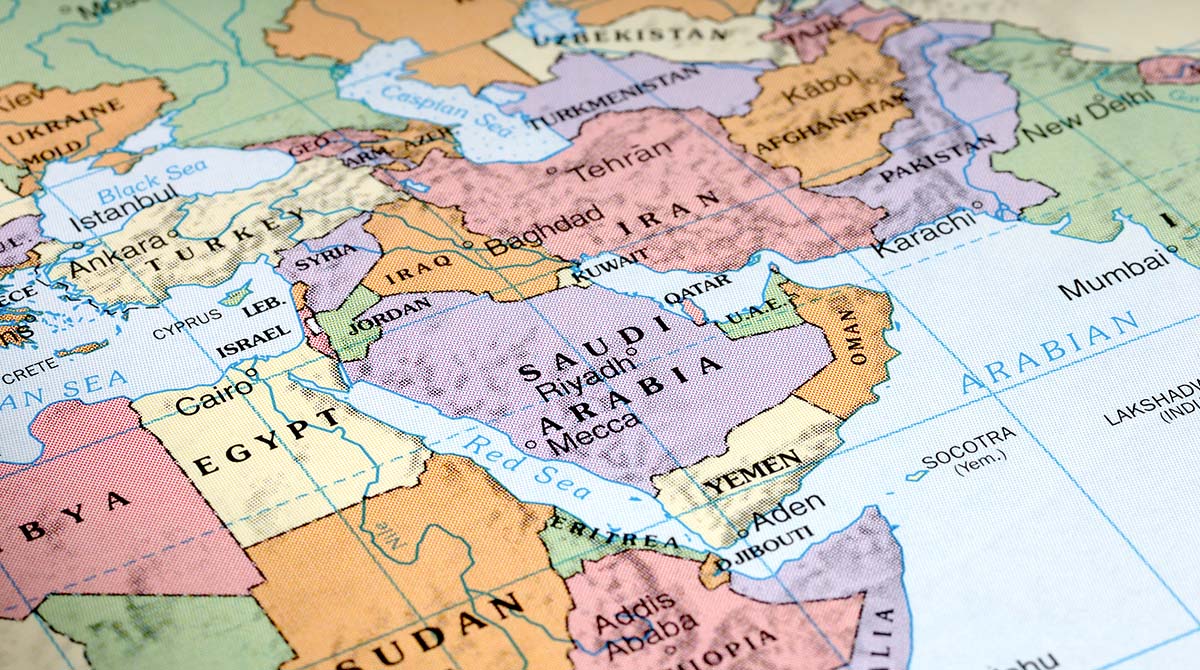
The military escalation in the Middle East, in addition to physical risks to vessels and crew, also creates a legal minefield. Commercial war-risk coverage has been withdrawn by most major insurers effective March 5, 2026, raising immediate questions among our members regarding their rights and obligations toward charterers and cargo interests.
In this document, we outline the key points of attention.
- Safe Berth / Safe Port Warranty: The most important question usually concerns the “Safe Berth Warranty” (or Safe Port Warranty), which may apply explicitly or implicitly. Under English law, a charterer is generally obliged to direct the vessel only to ports that the vessel can safely reach, use, and leave. Given the current situation, ports in the region must in almost all cases be considered unsafe, partly due to the risk of vessels becoming detained or stuck. However, the precise operation of this principle depends heavily on the type of charterparty and the specific facts and circumstances.
-
- Time Charter: In time charters, the safe port warranty is usually explicitly included. Even if a specific clause is absent, an implied obligation often applies when the risk has materially increased after the agreement was concluded. The owner then generally has strong grounds to refuse orders to sail to the region. This is different if the time charter was concluded after the escalation began.
- Voyage Charter: In voyage charters, the port is typically specifically agreed upon, so it is assumed that the owner has accepted the associated risks. There is no implied safe port warranty; an explicit warranty must be included. Any changes to the voyage or cancellation must therefore, in principle, be renegotiated between the parties.
-
- BIMCO Force Majeure Clause and War Risks Clauses as a Safety Net: When no (or insufficient) safe port warranty applies, the BIMCO Force Majeure Clause can provide relief. This clause contains a clear, exhaustive list of events that make performance impossible, thereby avoiding prolonged legal debates about the scope of force majeure.
- As an additional safety net, the 2025 versions of CONWARTIME and VOYWAR offer greater certainty and clarity.
-
- CONWARTIME 2025 (Time Charter): Under CONWARTIME 2025, the owner has the right to refuse orders if, in their reasonable judgment, they believe the vessel, cargo, or crew will be exposed to war risks. An important innovation compared to previous versions is the response period: after refusing an order, charterers have 72 hours (previously often 48 hours) to nominate an alternative, safe port.
- VOYWAR 2025 (Voyage Charter): VOYWAR 2025 regulates, among other things, the allocation of costs and adjustments in the event of deviation or changes to the voyage due to war risks. Here too, the period to provide an alternative nomination is 72 hours, and there are rules regarding, inter alia, additional insurance costs.
-
We recommend avoiding the region for the time being until the situation has stabilized. For questions about the insurance implications or your legal position, please contact NNPC Marine Insurance via underwriting@nnpc-marine.nl or claims@nnpc-marine.nl.